
Current Ratio Explained: a Vital Liquidity Metric
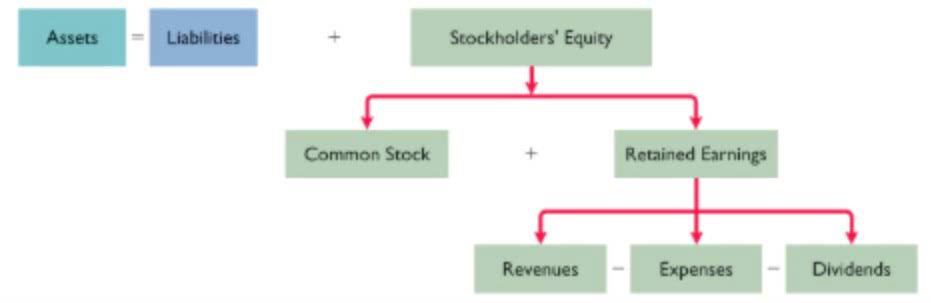
Up next, we’ll look at how you can use debt ratio in guiding your investment decisions. But before that, let’s prepare ourselves for the process of deciphering the implications of different debt ratios. A good debt ratio would be 1.0 as it is relatively safer, whereas ratios of 2.0 or higher would be considered risky.
Importance and use of debt ratio formulas
Investors, including individual investors, institutional investors, and fund managers, closely examine the debt ratio when making investment decisions. A company with a favorable ratio may be financially sound and capable of generating consistent returns. Conversely, a high ratio might raise concerns about a company’s ability to manage its debt and fulfill its financial obligations.
Credit evaluation:

These assets are used to generate revenue and are essential for operations. Once the debt amounts are totaled along with the assets, the debts would be divided by the assets as shown in the formula below. Seeking the help of a financial advisor can be beneficial in a variety of Bookkeeper360 Review situations. They can provide personalized guidance and advice to help you navigate complex financial situations and make informed decisions. In both cases, investors can monitor the debt ratio trend in the strategic plan’s context. So while a snapshot of a debt ratio is helpful, it’s not the only thing to consider when investing in a stock.
Factors Influencing an Optimal Debt Ratio
Credit rating agencies also use it as one of the factors in assessing a company’s credit rating. A high debt ratio can be misleading when comparing companies of different sizes. Large, well-established companies tend to have higher debt ratios due to borrowing at lower interest rates, while high-growth startups often have little or no debt. Other factors such as an organization’s policy on CSR, its current operational needs, and the expected returns on CSR investments also play a significant role.
Your Financial Accounting tutor
- A lower ratio indicates a company is at a lower risk of defaulting on its loans and may be more likely to secure favorable financing terms.
- The company could be financed by primarily debt, primarily equity, or an equal combination of both.
- Comparing debt-to-equity ratios over time for a single company or between companies in the same industry provides an important metric when evaluating stocks.
- These companies have more assets financed by debt, meaning they have to earmark a sizable chunk of their revenue to pay back their loans.
- This might indicate a potential cash flow problem and should be monitored closely.
- The debt ratio is a measure of the amount of debt a company or individual has relative to their total assets.
Emagia offers advanced financial solutions that assist companies in managing and optimizing their debt ratios. By providing tools for real-time financial analysis, Emagia enables businesses to monitor liabilities and assets effectively, ensuring informed decision-making and financial stability. The debt and the times interest earned ratios both measure a company’s financial risk.
Cash Flow Statement: Breaking Down Its Importance and Analysis in Finance
By understanding a debt ratio of 0.5 indicates: its significance and using it to inform financial decisions, you can better manage debt, reduce risk, and improve your overall financial well-being. By looking at their debt ratio, you can get a sense of their level of financial leverage and their ability to manage debt. If the company has a high debt ratio, this may indicate greater risk and potential for financial difficulties.

In the meantime, explore how other leading companies modernize their finance operations with Tipalti. It’s important to note that different industries have varying benchmarks for what constitutes a healthy debt ratio. Keep in mind that a higher D/E ratio at the startup stage doesn’t necessarily mean it’s a bad thing.

How do you calculate the debt to equity ratio?
- Analyzing the debt ratio involves understanding what different debt ratio values signify and how they can impact a company’s financial health.
- Now, by definition, we can conclude that high leverage is bad for businesses and is negatively evaluated by analysts.
- For instance, capital-intensive industries like manufacturing may naturally have higher D/E ratios than an ecommerce business.
- This is because a small decline in sales can lead to a large decline in income.
It focuses on the company’s ability to meet its current obligations, which are usually short-term in nature. When https://sourcesdubien.com/2022/03/25/monfalcone-garris-private-banking-investment/ a company has a negative debt ratio, it signifies that its liabilities exceed its assets, resulting in negative shareholder equity. This means the company owes more than it owns, which is considered highly risky.
- Determining whether a debt ratio is good or bad depends on several factors, including industry norms, financial goals, and risk tolerance.
- Therefore, considering both ratios is essential to understand your company’s short-term solvency accurately.
- Lenders and creditors, such as banks and financial institutions, rely on this metric to evaluate a company’s creditworthiness and determine its borrowing capacity.
- This indicates the company has enough current assets to cover its short-term liabilities.
Industry differences play a significant role in determining what’s considered a healthy debt ratio. Each industry has its own standard debt-to-equity (D/E) ratios, and what’s acceptable in one industry may be viewed as risky in another. However, investors should consider why profitable, growing companies are hoarding cash instead of productively investing in the business. Conservative balance sheets reflect a lack of growth opportunities or excessive risk aversion.
- This typically means a debt-to-equity ratio below 0.5 and a debt-to-income ratio under 1.0.
- This debt ratio is useful for analyzing a company’s financing strategy.
- Now, the debt ratio helps us see how big a slice of this pie is covered by debts or loans.
- It is the percentage of your monthly debt payments to your monthly gross income.
- Debt is considered riskier compared to equity since they incur interest, regardless of whether the company made income or not.
- This ratio indicates how many dollars of debt exist for each dollar of equity.
Your company’s total debt is the sum of that debt and other financial obligations. Examples of total debt are wages, credit card debt, utilities, or invoices to be paid. Most often, it’s the money your company is borrowing at any given time. Looking at the debt ratio again, the debt ratio is calculated by dividing the total debt by capital. Depending on the type of industry, a high-level DE may be common in some, while a low-level debt ratio may be common in others. The debt ratio is valuable for evaluating a company’s financial structure and risk profile.
